

Overview
The workspace directory is a review surface. It is designed to help admins decide which workspace to open next, not to finish every investigation from one table.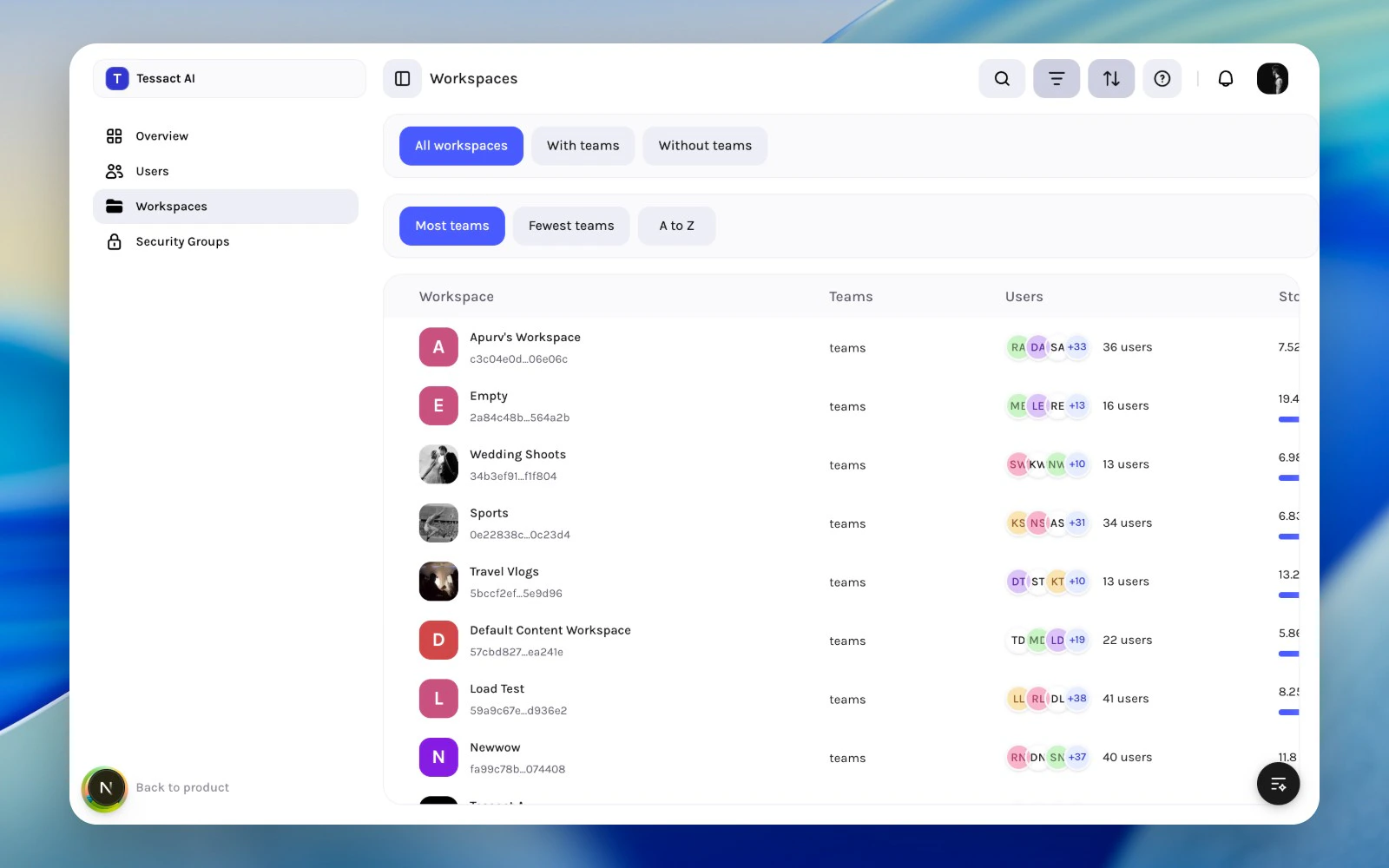
Workspace directory with workspace, teams, users, and storage columns
What The Directory Shows
Together, these columns help you find the workspaces that deserve deeper review.
Guide: Run A Directory Review
1
Search or segment the list first
Use the workspace search plus filter and sort controls to narrow the table before making decisions.
2
Scan for empty or unclear workspaces
Focus on workspaces with weak identity, no clear operational footprint, or suspiciously low team activity.
3
Use storage and membership as escalation signals
High storage usage, broad membership, or rapid growth are signs that the workspace should be opened for a deeper admin review.
Review Patterns That Work Well
Sprawl review
Use A to Z to spot duplicates, naming drift, or old workspaces that should be merged or retired.Operational review
Use Most teams to find the workspaces most likely to need active governance.Cleanup review
Use Without teams to isolate workspaces that may no longer represent active work.Best Practices
- Open the workspace when the table raises a question; do not infer too much from the directory alone.
- Treat naming clarity as part of governance, not cosmetic detail.
- Review both small empty workspaces and unusually large ones.
- Use the directory regularly so workspace cleanup stays incremental.
Next Steps
Workspace governance
Return to the broader operating model behind workspace reviews.
Workspace membership reviews
Go deeper into access review once a workspace needs attention.